
Odds and Margin Explained

Odds are the language of betting, and the words are numbers. Learning to read them turns a confusing screen of figures into a clear statement of how likely an outcome is, how much a win would return and how much of your own money the operator keeps in the middle.
What an Odd Actually Says
A price is simply a way of writing a probability in a different format. Short prices correspond to outcomes the operator considers likely, long prices to outcomes it considers unlikely, and the distance between them measures uncertainty rather than quality or safety.
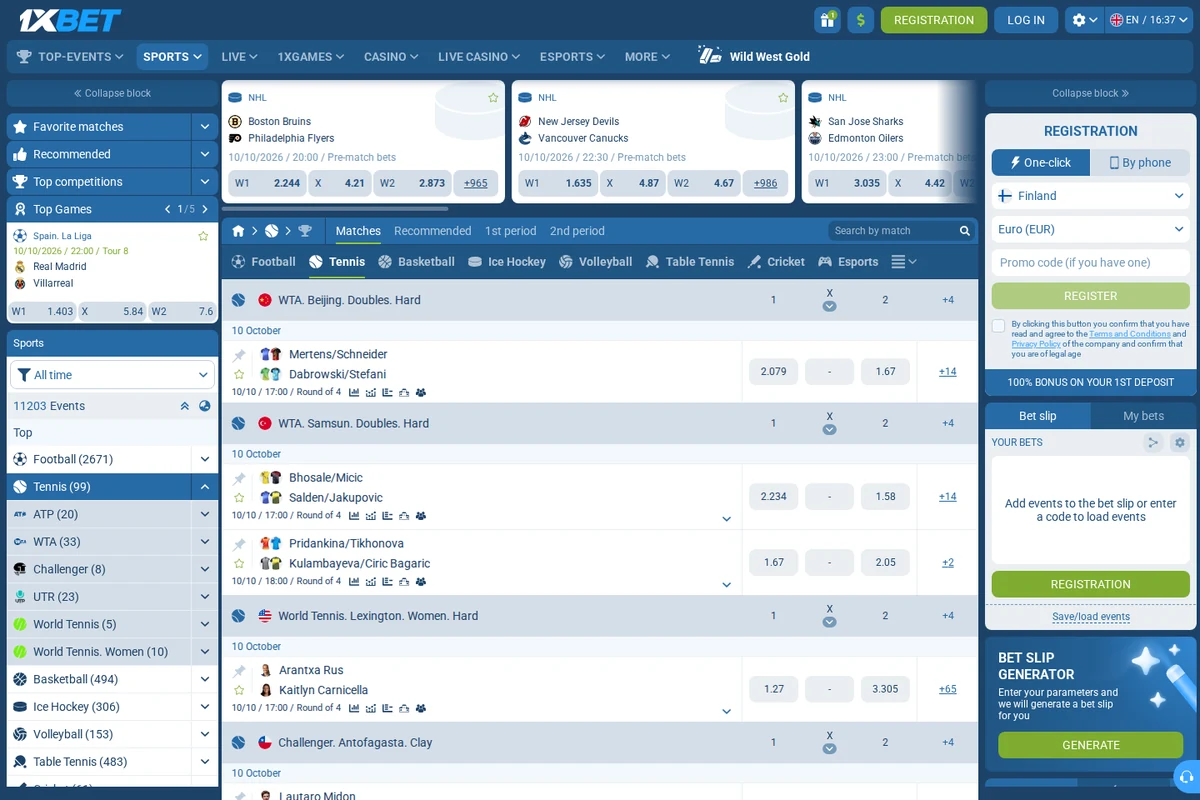
Reading a price therefore tells you what the market believes, not what will happen. A heavy favourite at a very short price loses often enough in practice that the result feels surprising, and part of the reason is that the price itself exaggerates how certain the outcome really is.
From Price to Probability
One divided by the decimal price gives a rough probability. A price of four corresponds to about a quarter, a price of two to about a half, and a price of one and a half to roughly two thirds. The arithmetic is simple enough to do mentally once you have used it a few times on real markets.
The probabilities of every outcome in a market, added together, come to more than one hundred per cent. The excess is the operator margin, and it tells you roughly how much is built into the prices before any bet is even placed. Recognising that margin is the first step towards judging value.
Where the Margin Hides
The margin is not printed anywhere and never appears on the bet slip. It is spread across all the prices in a market, which is why comparing two operators on the same event is a useful exercise: the difference you find is usually the difference in their margins rather than a disagreement about the teams themselves.
In markets with few participants the margin tends to be wider, because the operator carries more risk and needs more protection. Popular markets on major events are usually priced more tightly, which is not an invitation to bet on them but a fact worth knowing when you compare prices.
Comparing Two Prices
- Look at the same market on more than one operator where possible.
- Ignore promotional claims and read only the number you would actually take.
- Check whether the price is decimal, fractional or American before comparing.
- Remember that a small difference repeats across every bet you place.
- Treat any price without a clear market behind it as a warning sign.
Reading a Price Quickly
With practice, a price converts into a rough probability almost instantly, which makes the screen much easier to navigate. The skill is not in the multiplication but in resisting the pull of a long price that looks like easy money simply because the number is large.
A long price is a small probability written attractively. Understanding that a price of ten means roughly one chance in ten, before any margin, is the correction that keeps a bettor from chasing outsiders on the assumption that a big number means a big opportunity.
Common Price Formats
| Format | How it looks | What it describes |
|---|---|---|
| Decimal | 2.50 | Total return per unit staked |
| Fractional | 3/2 | Profit per unit staked |
| American | +150 | Profit on a hundred-unit stake |
| Short | 1.10 | A very likely outcome, small return |
| Long | 12.00 | An unlikely outcome, large return |
Why Prices Differ Between Operators
Given the same fixture, two operators rarely publish exactly the same number, and the difference is usually a matter of margin rather than a genuine disagreement about the teams involved. One may build four per cent into its prices and another seven, and the identical bet then carries a measurably different value depending on where it is actually placed.
Competition tends to narrow that gap on the markets that attract the most attention, while quieter markets keep wider prices because fewer people are trading them. Since no operator announces its margin, the only way to see it is to compare two prices on the same market side by side and notice which one is longer.
A small difference looks trivial on a single bet and stops looking trivial once it repeats across every bet placed over a season. That is the practical argument for comparing before committing: not to chase a fraction of a unit, but to avoid paying the widest margin available through nothing more than habit.
Using Prices Sensibly
Prices are information, not instructions. They describe a market consensus about probability, and they can be read carefully without any obligation to act on what they say, which is precisely why understanding them is valuable even for someone who bets rarely.
The practical benefit is a calmer relationship with the interface. When you know what a number means, a long list of markets stops being a wall of temptation and becomes a set of statements you can evaluate, accept or ignore on your own terms rather than the screen’s.
Read next
Sports Betting Basics: How a Bet Works
What a bet actually is, where the price comes from and how a market is settled.
Types of Bets: Singles, Combos and Systems
How each structure changes the chance of winning and the size of the return.
Live Betting: How In-Play Prices Move
Why prices change during an event and what that means for the person betting.
