
Currency and Fees: What to Expect
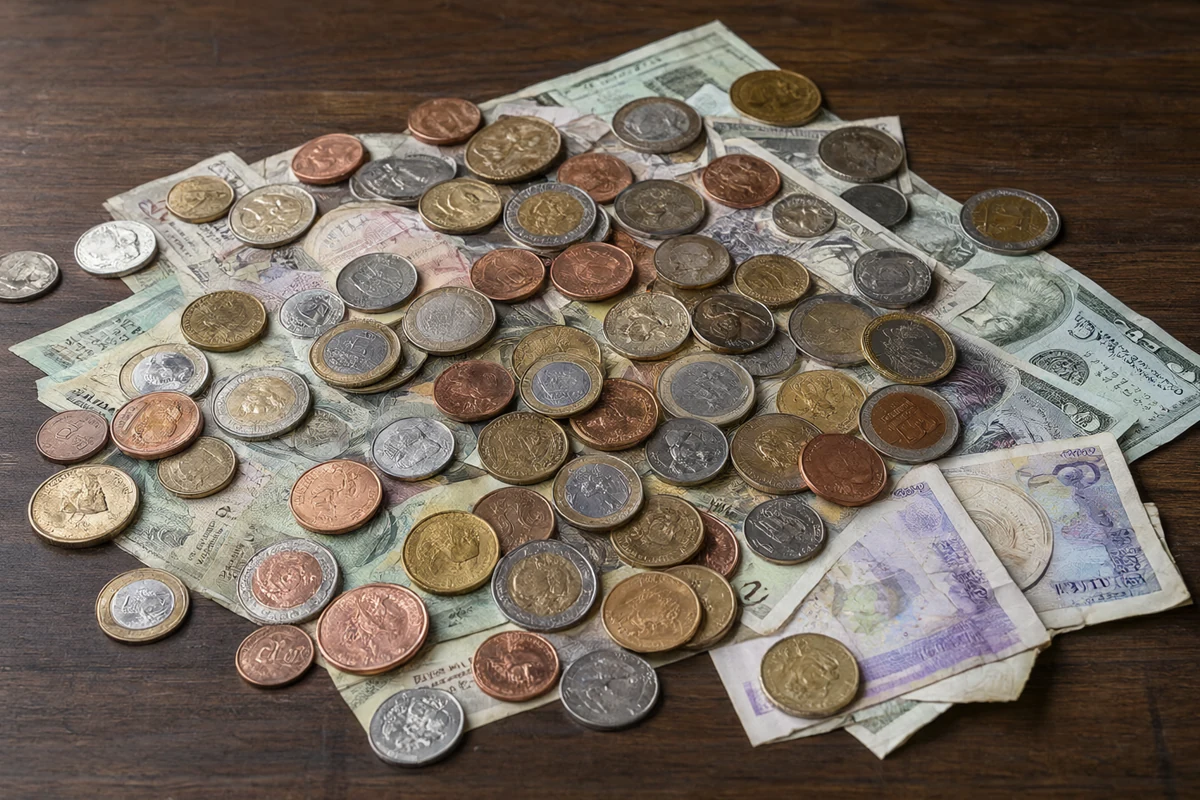
Currency and fees are the details players notice last and pay for first. A payment that looks costless can quietly lose value through conversion or a provider charge, and understanding where those costs appear makes the real price of a transaction much easier to judge.
Why the Account Currency Matters
The currency you chose at registration becomes the unit your balance is shown in, and every deposit is converted into it. If the currency of your bank account differs from the one on the betting account, each payment crosses an exchange boundary and a conversion rate is applied somewhere along the way.

Matching the two removes that step entirely. A player whose bank operates in one currency and whose betting balance is held in another will always deal with conversion, while a player who keeps both the same sees simpler statements and fewer small deductions that are hard to account for afterwards.
Where Fees Actually Appear
Platforms generally do not charge a separate deposit fee, and the cost of a payment instead shows up in the provider layer. A bank may add a cross-border charge, a wallet may take a percentage of the transfer, and a card network may apply its own conversion margin on top of the visible exchange rate.
This is why two players paying the same nominal amount can end up with different balances. The difference lies outside the betting site, in the rules of the bank or wallet, which is why the provider statement is the place to look when a payment seems to have cost more than expected.
Reading an Exchange Rate
- Compare the rate applied with the mid-market rate that day.
- Expect a margin rather than the perfect interbank figure.
- Check whether the fee is a percentage or a fixed amount.
- Look for the conversion line on the provider statement.
- Avoid converting twice by matching currencies where possible.
A conversion margin is normal and not a sign of a problem; the question is how large it is and who takes it. Fixed fees favour larger payments, while percentage fees are gentler on small ones, so the cheaper method genuinely depends on how much you tend to move at a time.
Currency Choice and Withdrawals
Withdrawals follow the same logic in reverse. Money leaves the account in the platform currency, is converted if necessary, and lands in the receiving method, with each conversion potentially costing value on the way. A withdrawal to a method in the same currency as the account avoids the loss for free.
This is another argument for keeping one consistent method in one currency. Every additional hop between currencies is another small deduction, and a player moving money through three different systems will always pay more than one moving the same amount through a single matched pair.
Planning Payments Around Cost
The cheapest transaction is rarely the one with the lowest advertised fee; it is the one that avoids conversion and extra hops. A payment made in the same currency as the account, through a single method you already use, carries the smallest total deduction of any combination available to most players.
Consolidating several small payments into one larger transfer also reduces cost, because fixed fees are charged per transaction rather than per unit of value. A player who deposits frequently in small amounts pays more across a month than one who moves the same total in fewer, larger payments.
Timing matters for some networks. Crypto transfers, in particular, cost more when the network is busy, so a payment made in a quiet period can be noticeably cheaper than the same payment made during a spike. The difference is set by the network rather than by the platform or the wallet.
It is worth checking the provider statement a few days after a payment rather than only on the day it happens. Some charges appear later in the cycle, and a fee that was invisible at the time shows up clearly once the statement is issued.
Keeping currency and method stable over time gives the clearest picture of what you actually pay. Changing routes constantly makes comparison impossible, while a consistent habit turns cost into a predictable number you can plan around rather than a series of surprises.
Cost Situations Compared
| Situation | Where the cost sits | How to reduce it |
|---|---|---|
| Same currency both sides | Usually none | Keep it matched |
| Bank cross-border | Fixed plus margin | Use a local method |
| Wallet percentage | Share of the transfer | Consolidate payments |
| Crypto network | Per-transaction fee | Choose a quieter network time |
| Card conversion | Network margin | Pay in the account currency |
Judging the Real Cost
The honest way to judge a payment is to compare what left your bank with what arrived in the balance, including any fee charged a day later. That single comparison tells you the true cost of the route you used, far more reliably than the fee table printed on a help page.
Once you know that number, choosing a method becomes straightforward. The cheapest route is the one whose combined margin and fee is smallest for the amount you actually move, and that is usually the route that keeps currencies matched and hops to a minimum.
Read next
Deposit Methods: How the First Payment Works
Matching your details, choosing a method and what to check before paying in.
Withdrawal Process: Steps and Timing
Why verification comes first, and what can slow a payout down.
Payment Limits and How They Are Set
Minimums, maximums and account-level limits decided by the operator.
