
Aviator: How the Game Works

Aviator is a crash game: a multiplier climbs from one upwards, the round ends without warning, and the only decision is when to step away from the screen with the value shown at that instant. Everything about the game follows from that single mechanic, including why it feels so much faster than other formats.
The Shape of a Round
Every round begins with a short waiting period while bets are placed, then a curve begins to rise. The number next to the curve is a multiplier applied to whatever stake is in play, and it grows continuously until the round ends at a point that was decided in advance and is not revealed until it arrives.
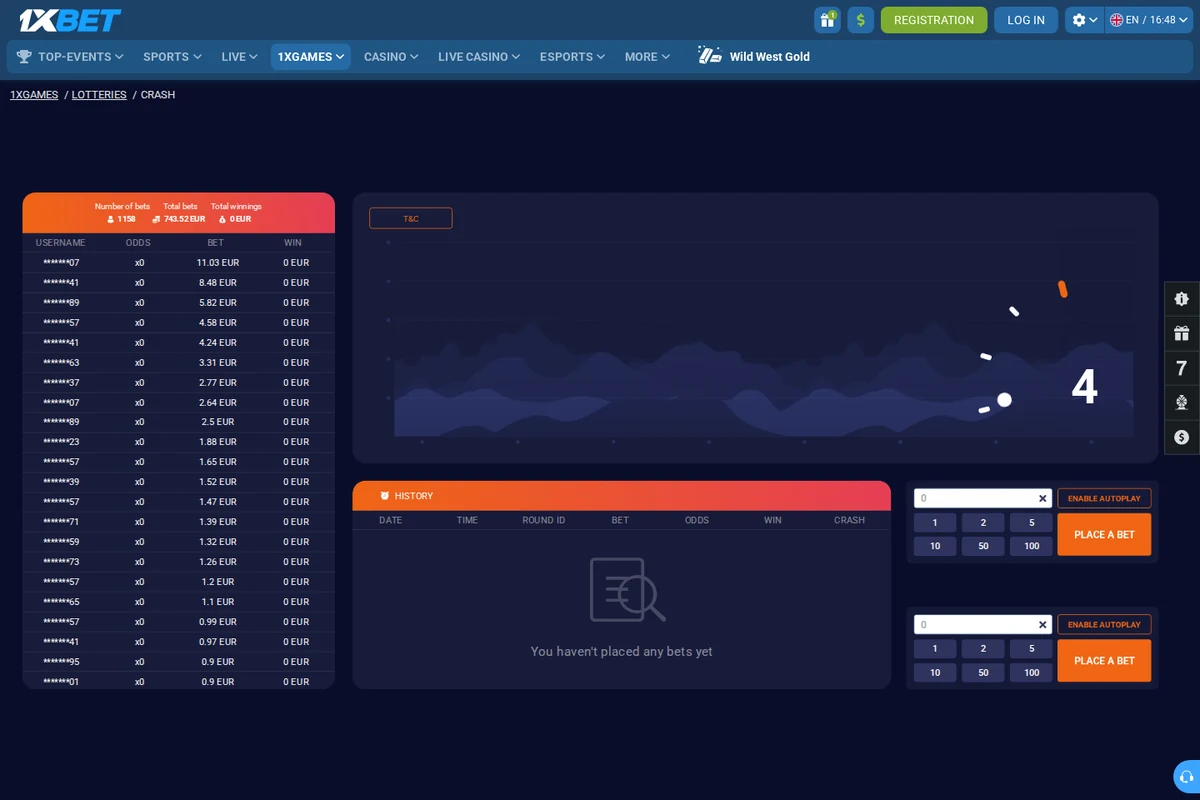
When the round ends, every stake still in play is lost. Bets that were taken out before that moment are paid at the multiplier shown at the moment they were collected, which means two players in the same round can have completely different outcomes from identical stakes.
Placing a Bet Before Take-Off
Bets are entered during the waiting phase and confirmed before the curve starts moving. Once the round is under way, a stake already placed can be collected but not withdrawn or amended, so the decision to participate is made before anything happens on screen.
Some versions of the interface accept two bets in the same round, each with its own stake and its own collection. That option doubles the exposure and the decisions in a single round, which is convenient for players who like a plan and dangerous for players who are improvising.
Cashing Out in Time
Collection is a single action and it must happen before the round ends. There is no partial collection and no extension: the moment passes, and what remains is either paid or lost depending entirely on whether the button was pressed in time.
That is the whole game. It requires no analysis of teams or markets and no reading of form, which explains its popularity and also explains why it can be misleading: the feeling of control is strong even though nothing about the outcome is influenced by the player at all.
Auto Settings and Two Bets
- Automatic collection pays out at a multiplier you choose in advance.
- Automatic staking repeats the same bet every round without further input.
- Both may be combined, which removes the need to press anything.
- A second bet in the same round doubles the exposure.
- Stopping the automation is a decision that must also be made in advance.
What the Multiplier Means
The multiplier describes the return on the stake if it is collected at that value, nothing more. A multiplier of five means five times the stake, and it says nothing about the likelihood of reaching that number, which the interface never displays because the game does not disclose it in real time.
Higher multipliers are rarer by construction. Small ones are common, large ones are unusual, and the distribution is set so that the game produces the margin for the platform across many rounds, exactly as every other product on the site does.
Rounds and Outcomes
| Element | How it works | What to watch |
|---|---|---|
| Waiting phase | Bets are placed and confirmed | The panel closes when the round starts |
| Ascent | Multiplier rises continuously | It can end at any moment |
| Collection | Locks the value shown | Must happen before the round ends |
| Round end | Uncollected stakes are lost | There is no second chance |
| Next round | Begins after a short interval | Each round is independent |
Reading the Multiplier History
Most versions of the game show a strip of recent results, and it is the most persuasive element on the screen. It looks like evidence, and it contains none: each of those values was produced independently, and the sequence tells you nothing about the round that is starting now.
Its real effect is behavioural rather than informational. A run of low multipliers makes a higher one feel due, and a record high makes the next round feel dangerous, and both impressions push towards choices that were not planned before the session began.
The panel is best treated as a log rather than a forecast. It confirms what already happened and offers nothing about what comes next, which is exactly what the independence of the rounds implies once the mechanic is understood.
It is also worth noticing how quickly that strip fills. Many rounds pass in a very short time, so the panel presents a large sample that still says nothing about the next value while looking like a rich body of evidence.
Anyone who tracks the sequence against the rounds that follow will find exactly what independence predicts: no relationship at all. The exercise is harmless, and occasionally instructive for anyone inclined to believe otherwise.
Final Thoughts on the Rules
Aviator is a small set of rules repeated quickly, and understanding them takes minutes. Deciding how much of your own money to put through those rules takes longer, and it is a decision best made before the first round rather than during it.
Treat the game as what it is: a fast, entirely random format with a fixed house margin, no pattern to detect and no strategy that changes the odds. Played within a budget set in advance, it stays a game; played as a way to recover earlier losses, it becomes something else entirely.
Read next
Aviator: Auto Cash-Out and Settings
What automation changes, what it cannot change, and how to set limits around it.
Aviator Demo: Practice Without Money
What demo mode teaches about the interface and what it can never show you.
Aviator: Randomness, Fairness and Myths
Why rounds are independent and why no pattern on screen predicts the next one.
